When is an AMG not really an AMG, but still a fitting homage to the models that built the brand?
The new E 43 is the eighth '43 after the SLC 43, GLC 43, GLC 43 Coupe and four C 43s, all of which arrived last year, and plugs a mighty gap between the mainstream E-Class line-up and the upcoming full-house E 63 S, while forming an almost exact philosophical fit with the E 36 and E 55 that helped put AMG on the map in the 90s.
How? Unlike the angry dinosaur V8 growl, supercar-like performance and generally hardcore demeanour we love about the current top-level models, the E 43 is more of a rapid grand tourer than a four-door supercar. Which is kind of what the AMGs of old were, before they sprouted exhausts from both sides and became more menacing than Mercedes.
Explore the 2017 Mercedes-Benz E-Class range
Mercedes-Benz E-Class E200 and E220d 2016 review
Mercedes-AMG E63 S 2017 review | first drive
Mercedes-Benz E400 2017 review | road test
Mercedes-Benz E350d 2016 review | snapshot
Mercedes-Benz E300 2017 review | road test
Mercedes-Benz E220d 2016 review | snapshot
Mercedes-Benz E200 2016 review | snapshot
The E 43 still boasts a muscular 295kW/520Nm from its twin-turbo V6 and all-wheel drive, but cloaks it all in an air-suspended package that's barely distinguishable from the AMG styling pack available from the base E 200 up.
It's priced $20,000 higher than the E 400 but still around $90,000 less than the E 63 S that arrives in June, and does nothing to dissuade the notion that Mercedes makes a car for almost everyone. And we're glad they do, particularly when the latest addition boasts a 4.6s 0-100km/h claim that would trump most mid-engined supercars of the 90s.
It also promises to be a star-badged alternative to the new BMW 540i, Audi S6 and even the Lexus GS F.
Mercedes-Benz E-Class 2017: E43
Safety rating
Engine Type
3.0L turbo
Fuel Type
Premium Unleaded Petrol
Fuel Efficiency
8.4L/100km
Seating
5 seats
Price from
$79,500
What are the key stats for the engine and transmission? 8/10
Rather than simply plonking the 3.0-litre twin-turbo V6 from the other '43s in the E-Class body and fettling the tune to edge it ahead performance-wise over the smaller models, the E 43 uses larger turbos to boost power by 25kW but retains the same 520Nm, which is also 50kW and 40Nm greater than the E 400.
Like all current E-Class variants, the engine is backed by Mercedes' very clever nine-speed torque converter auto and follows the E 400 and other '43s by sending power to all corners via the 4Matic all-wheel drivetrain.
Is there anything interesting about its design? 7/10
Unlike the bulging wheelarches and gaping gob of the new E 63, the E 43 uses discrete flourishes to distinguish it from the regular AMG-pack E-Class.
Most obvious are the more aggressive 20 x 8 and 20 x 9 'RTO' wheels, but if you look closely it also scores subtle black winglets on the outer edges of the front bumper openings, a single bar grille insert, boot lip spoiler and black split exhaust tips.
Hiding within those wheels are upgraded 360mm brakes at all corners, with four piston calipers up front and single at the rear.
On the inside, the E 43 steps up to perforated leather and 'Dynamica' pseudo suede seat trim but the fronts appear to be the same comfortable shape as the regular AMG pack seats. Aside from a smattering of AMG badges, that's about it. Like the outside, it looks a little bit sporty, but luxury is the focus.
Does it represent good value for the price? What features does it come with? 7/10
At $159,900 the E 43 sits exactly $20,000 above the E 400. As you'd expect it comes fully loaded with comfort and convenience features, including a choice of black, brown or beige nappa leather, 'Air-Balance' cabin scent and air filtration system, tinted windows, panoramic sunroof, head-up display and a 13-speaker Burmester surround sound audio system.
Like all new E-Classes, the E 43 also comes with the brilliant Drive Pilot suite of active cruise control and lane guidance tech that permit semi-autonomous driving, including the ability to change lanes. More sculpted AMG front seats and a Dynamica pseudo suede-trimmed steering wheel are available as a $3076 option, but it's worth noting that the seat upgrade eliminates the PRE-SAFE impulse side function that moves passengers toward the centre of the car when a side collision is anticipated.
How practical is the space inside? 8/10
Like all E-Class sedans, the E 43 has amble room for four large adults to travel comfortably. Everyday practicality is well considered with dual cup holders front and rear with bottleholders in each door, map pockets and ISOFIX child seat mounts in the outer rear positions. Boot capacity is a useful 540 litres. Like all AMG performance models, the E 43 forgoes run-flats or a spare tyre in favour of an inflation kit.
How much fuel does it consume? 7/10
Despite making more power and torque, the E 43 carries the same 8.4L/100km official combined figure as the E 400, but requires more expensive 98RON to achieve it. The E 43 also scores a 14-litre larger 80-litre fuel tank, which should stretch the range between fills by around 167km based on the official figure.
What safety equipment is fitted? What safety rating? 10/10
Like all versions of the W213 E-Class, the E 43 carries the maximum five star ANCAP and EuroNCAP safety ratings. A brilliantly integrated suite of active and passive safety features go well beyond its nine-airbag count, 360-degree parking cameras, rear cross-traffic alerts, and a pedestrian-protecting active bonnet.
Warranty & Safety Rating
Basic Warranty
3 years / unlimited km warranty
ANCAP Safety Rating
What does it cost to own? What warranty is offered? 7/10
As with all Mercedes passenger cars, the E 43 is covered by a three-year, unlimited kilometre warranty. Service intervals are either 12 months or 25,000km and the first three services are capped at $668, $1356 and $1356 respectively.
What's it like to drive? 9/10
Working our way out of Melbourne via its network of motorways, there's little aside from perforated leather and Dynamica faux suede seats to tell us we're aboard something a bit more special than most E-Classes.
Left in Comfort mode via the console-mounted drive select toggle, the engine delivers a creamy urge with max torque available from 2500rpm, the transmission is silken and the ambience is very E-Class.
On the country roads beyond Melbourne's urban limits, you can tell you're riding on 20-inch wheels with limited sidewalls, but it's all entirely liveable and still very Mercedes.
Flick it over to Sport mode and it's much the same, but confronted with the bitumen rollercoaster that is Chum Creek Rd (look it up, it's worth it), we felt it was time for Sport +. Race mode is reserved for the full-blown AMGs, but Sport + instantly transforms the E 43.
The steering gets heavier, the exhaust gets louder and the transmission drops at least one ratio, but the dampers also become much firmer which makes it feel at least a couple of hundred kilos lighter than the aluminium-abundant W213 E-Class already is.
The stability control also loosens its leash and surprisingly permits some play from the rear end when you're really pushing under throttle. It is all-wheel drive, but the torque bias favours the rear wheels by a factor of 69:31.
The auto manages to shift quickly and the abundance of ratios means it happens very often. You'd have to be pretty bored to bother with the paddle shifters, as everything responds beautifully to your right foot – including the brakes.
It's very easy to drive very fast and you soon forget you're driving a near-5m long sedan.
The V6's growl will never match a V8 symphony, but it helps to stamp the E 43's individual character. If it made no noise it would be disappointing, but it does well to push a classic V6 bark past its turbos.
Verdict
If you want a fast Benz but your other half prefers genuine comfort and doesn't like the sound of NASCAR, this is your solution. It's an opulent luxury saloon by default, but with proper performance and personality just the flick of a switch away.
We know the E 63 S will be sharper and 1.2s quicker to 100km/h, but it will also cost another E 200 more, and feel like a performance car ALL the time. The E 43 doesn't, which is just brilliant.
Would you sacrifice 1.2s and save about $90k and choose E43 over E63 S? Tell us what you think in the comments below.
Back to 2014 Kawasaki Motorcycle Model Review Page
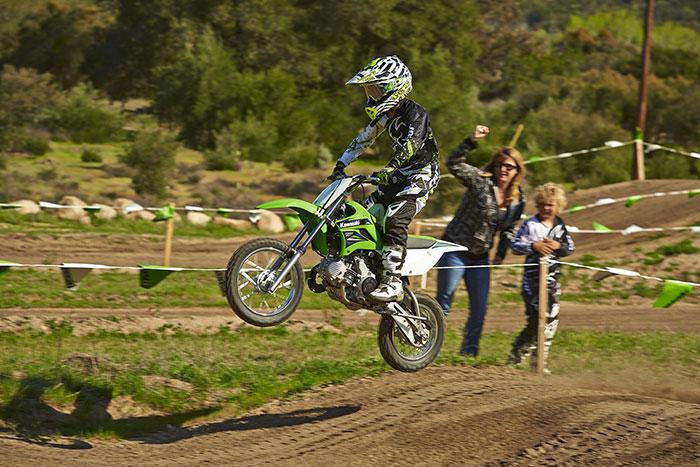
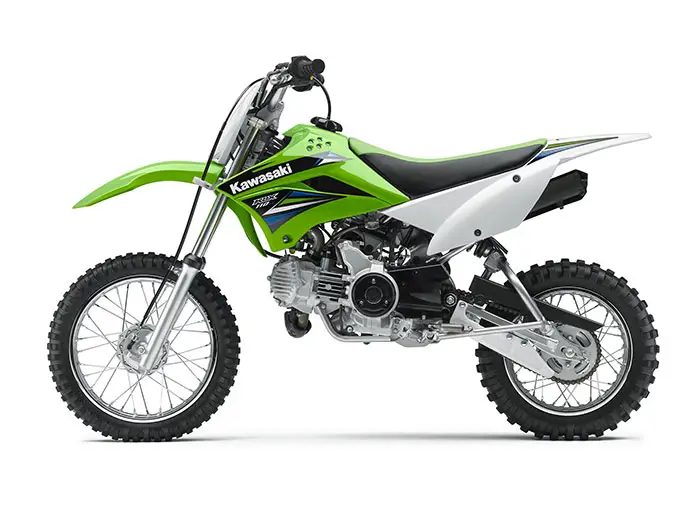
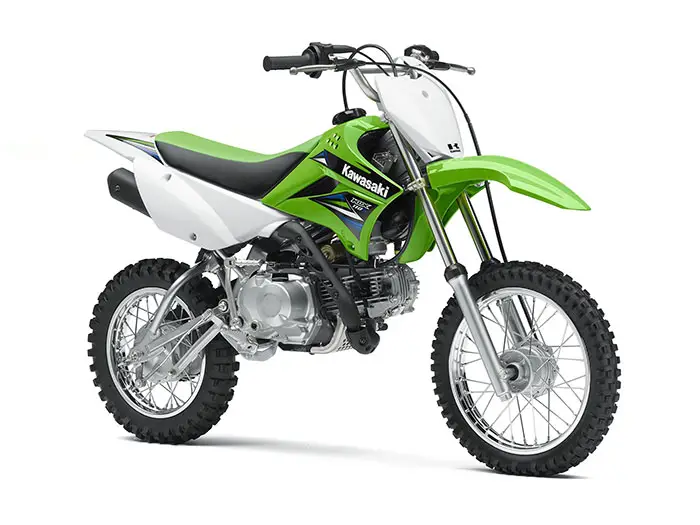
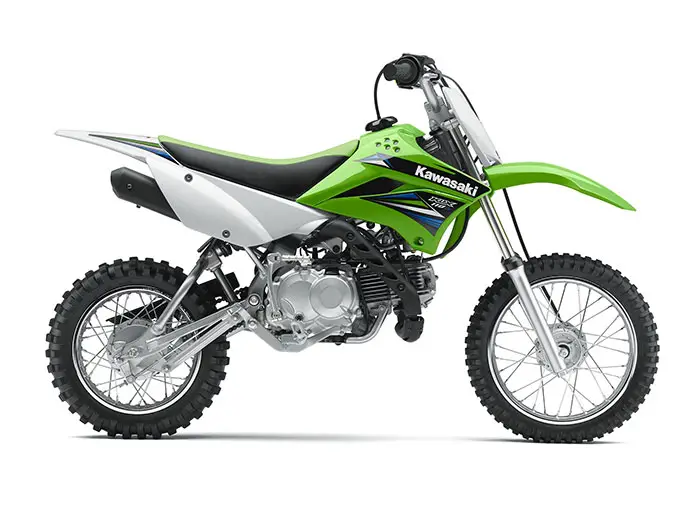
Click photos to enlarge. Our big, clean bike pics make great desktop wallpaper.
2014 Kawasaki KLX110L
2014 Kawasaki KLX110L
2014 Kawasaki KLX110L
2014 Kawasaki KLX110L
2014 Kawasaki KLX110L Review
2014 Kawasaki KLX110L
The biggest challenge in enjoying the KLX110 or KLX110L's amazing off-road capabilities is figuring out who's going to ride it first – because its compact dimensions, simple-to-use features, and choice of 2 models were designed for a wide range of beginning riders aged 13 and up…
Favorite Playbike with a Manual Clutch and Extra Seat Height
Where Kawasaki's popular KLX®110 is the model of simplicity in off-road performance, the KLX110L capitalizes on those desirable attributes while expanding its horizons. All of the classic KLX110 ingredients are in place on the L-model, including its smooth and powerful 111cc four-stroke engine with convenient push-button electric starting and a traditional kick-start lever for backup. But several key features further enhance the KLX110L's off-road prowess, making it the perfect off-road fun machine for larger and more experienced off-road riders of all ages.
In this case, bigger, or taller, is better, as the KLX110L's seat height measures 28.7 inches – nearly 2 inches higher than that of the standard KLX110 – thanks to a 2.4-inch longer fork that delivers 5.5 inches of travel up front and a longer shock that offers 5.2 inches of wheel travel out back. Naturally, this taller suspension comes with optimized spring and damping settings, giving those slightly larger riders the ability to push the KLX110L as hard as they choose.
More experienced riders often demand the superior momentum control of a manual clutch, so the KLX110L gets one to complement its smooth-shifting four-speed gearbox. This combination lets more aggressive riders wring every drop of performance from the KLX110L's torque-tuned, four-stroke engine.
Kawasaki's design team outfitted the KLX110L with a fuel tank, seat, side panels, shrouds and fenders that mimic the championship-winning KX™450F's bodywork. An MX-style seat is part of the package, along with a handlebar shape optimized to provide excellent comfort and control to a wide variety of riders. All the right steps have been taken to expand the KLX110L's off-road horizons. It's sure to expand yours.
The KLX110L can be customized with Authentic Kawasaki Accessories available at Kawasaki dealers.
2014 Kawasaki KLX110L Totalmotorcycle.com Key Features At A Glance…
– Push-button electric starting
– Manual clutch
– Four-speed manual transmission
– Longer suspension than a standard KLX110
– 28.7-inch seat height is 1.9 inches taller than a standard KLX110
2014 Kawasaki KLX110L Totalmotorcycle.com Features and Benefits
– Powerful 111cc engine
– KX-inspired styling
– Roomy ergonomics
Air-cooled, Four-stroke 111cc Engine
– All KLX 110 and 110Ls feature valve timing, free-flowing muffler and ignition system for optimum power and torque
– Push-button electric starting makes it easy to get rolling, while a kickstarter is included as a back-up
– Starter button and kill switch are located on the left handlebar for easy access
– KACR (Kawasaki Automatic Compression Release) keeps one exhaust valve open for easy starting
– KLX110L's compact, lay-down engine design is ideal for engine cooling and a low center of gravity
– An ignition timing inspection hole allows easy maintenance
– Choke knob on the 18mm carburetor is easy to operate with gloves on
Four-speed Manual Transmission
– Four ratios are intelligently spaced to help exploit engine power
– A manual clutch makes it easier to squeeze maximum performance out of the powerful little engine
– Shift drum cam groove and positioning spring result in optimal shift feel and positive gear engagement
Security Features and Parental Controls
– For added security, the KLX110L will only start in neutral
– The engine start/stop switch is within easy reach on the left handlebar
– A screw-type throttle limiter allows adult supervisors to control kids' speed while they learn
Capable Chassis
– 30mm telescopic fork with 5.5 inches of travel is tuned for optimal wheel and chassis control
– Tapered roller bearings in the lower steering stem add durability
– The 110L's handlebar shape suits a wide variety of rider sizes
– Stiffer spring and damping rates on the longer rear shock help control the rear wheel through 5.2 inches of more firmly damped travel, with greater resistance to bottoming compared to a standard KLX110
– 14-inch front and 12-inch rear knobby tires on strong, steel rims provide great off-road traction and durability, and keep seat height low
– Rigid rear brake rod allows excellent braking and pedal feel
Big KX™ Style, Built to Last
– The high-tensile steel backbone frame is strong, lightweight and built to take years of abuse
– Four strategically placed heat shields provide protection from the exhaust pipe
– A 28.7-inch seat height accommodates a broad range of riders
– KX450F-style fuel tank, seat, shrouds, side panels and fenders look fast even sitting still
– KX-style half-waffle grips provide better control and comfort
– A convenient side stand makes life easier
Additional Features
– A USFS-approved spark arrester comes as standard equipment
– The KLX110L meets California "Green Sticker" requirements for year-round riding fun
2014 Kawasaki KLX110L – Totalmotorcycle.com USA Specifications/Technical Details US MSRP Price: $2,499 USD
Type 4-stroke, Single Displacement 112cc Bore and stroke 53.0 x 50.6 mm Cooling Air Compression ratio 9.5:1 Valve system SOHC, 2 valves Fuel system Keihin PB18 carburetor Ignition Digital DC-CDI Starting Electric & Primary Kick Lubrication Forced lubrication (wet sump)
Brakes
Front: type Drum (90 mm) Rear: type Drum (110 mm)
Dimensions
Overall length 1,560 mm (61.4 in.) Overall width 650 mm (25.6 in.) Overall height 990 mm (39.0 in.) Wheelbase 1,075 mm (42.3 in.) Ground clearance 265 mm (10.4 in.) Seat height 730 mm (28.7 in.) Curb mass** 76 kg (167.6 lbs.) Fuel capacity 3.8 litres (0.8 gal.)
Type High-tensile steel backbone Wheel travel: front 140 mm (5.5 in.) Tire: front 2.50-14 4PR Wheel travel: rear 132 mm (5.2 in.) Tire: rear 3.00-12 4PR Caster (rake) 24.2° Trail 47 mm (1.9 in.) Steering angle (left/right) 45° / 45°
Performance
Maximum Power‡ 5.4 kW {7.3 PS} @ 7,500 rpm Maximum Torque‡ 8.0 N·m {0.82 kgƒ·m} @ 4,000 rpm
Suspension
Suspension, front 30 mm telescopic fork Suspension, rear Single shock
* The Manufacturer's Suggested Retail Price does not include freight, pre-delivery inspection or applicable taxes. The final price is at the discretion of the dealer. Prices and Specifications are subject to change without prior notice. The amount indicated as "Your price" may include an optional instant Mega Cash credit that is deducted from the manufacturer's suggested retail price before taxes. This promotion is time limited and certain conditions will apply. See your dealer for complete details. Offer not available on financed purchases and cannot be combined with any other special offers. The final price is at the discretion of the dealer. Prices and Specifications are subject to change without prior notice.
** Includes all necessary materials and fluids to operate correctly, full tank of fuel (more than 90% of capacity) and tool kit (if supplied)
‡ Power / Torque figures measured at the crankshaft.
The specifications mentioned here apply to and have been achieved by production models under standard operating conditions. We intend only to give a fair description of the vehicle and its performance capabilities but these specifications may not apply to every machine supplied for sale. Kawasaki Heavy Industries, Ltd. reserves the right to alter specifications without prior notice. Equipment illustrated and specifications may vary to meet individual markets. Available colours may vary by market.
The combination of a solid, leaf-spring rear axle, a low-range gearbox, mechanical locks on the centre and rear diffs and traction control means that most extreme off-road situations require little more than pressing the accelerator and adjusting the wheel so that it goes in the correct direction.
Volkswagen's designers have managed to apply the marque's trademark front end to the big pick-up, which is impressive given how different the Amarok in size, shape and purpose from its passenger car cousins.
The interior moves the class to the next level. Despite the low spec levels compared to Volkwagen's road cars, the build quality is exceptionally good, with tough but well-textured surfaces and an excellent driving position. Car drivers would notice the unusual height of the seats and driving position, but otherwise everything falls under the fingers in exactly the way that it would in, say, a Golf.
As for standard equipment, the Amarok has three to choose from - Trendline, Highline and the first edition Aventura models. The entry-level model equips the Amarok with electrically adjustable and heated door mirrors, front foglights, manually adjustable front seats, air conditioning, electric windows, and automatic post collision braking system, alongside Volkswagen's Composition infotainment system, complete with 6.3in touchscreen display, DAB radio, smartphone integration and USB connectivity.
Upgrade to Highline and you'll find luxuries such as parking sensors, a reversing camera, bi-xenon headlights, 18in alloy wheels, leather upholstery and heated front seats as standard, while the limited edition Aventura models get an unique metallic blue paint job, 19in alloy wheels and sat nav.
If the proof of the pudding is in the eating, then the proof of a pick-up is in driving it for 100,000 miles over bumpy roads. Given Volkswagen's reputation for build quality and reliability it's safe to say that Toyota, Nissan, Ford and Mitsubishi should be concerned, as should be the future incumbents to this sector.
Fisker Inc. on Wednesday officially introduced its Ocean electric crossover, in production-bound prototype form—with a series of innovations that includes a solar roof, power-out capability for charging other EVs or home backup, and an infotainment screen that can rotate from portrait to landscape with the push of a button.
The LA auto show introduction is exactly a year ahead of this sustainability-focused model's official production start—scheduled for November 17, 2022 at Magna-Steyr in Graz, Austria.
The Ocean will be offered in Sport, Ultra, and Extreme versions, with the single-motor front-wheel-drive Sport, at $37,499—before customers potentially claim a $7,500 federal EV tax credit.
The base Ocean Sport will employ lithium-iron phosphate (LFP) battery cells, from CATL, according to Fisker. Other models will include nickel manganese cobalt (NMC) cells also from CATL. Sizes and capacities of the packs haven't yet been released.
Fisker has already said that both packs in the Ocean will charge at a peak of more than 250 kw. The company plans to subsidize some Electrify America fast-charging.
2023 Fisker Ocean prototype - November 2021
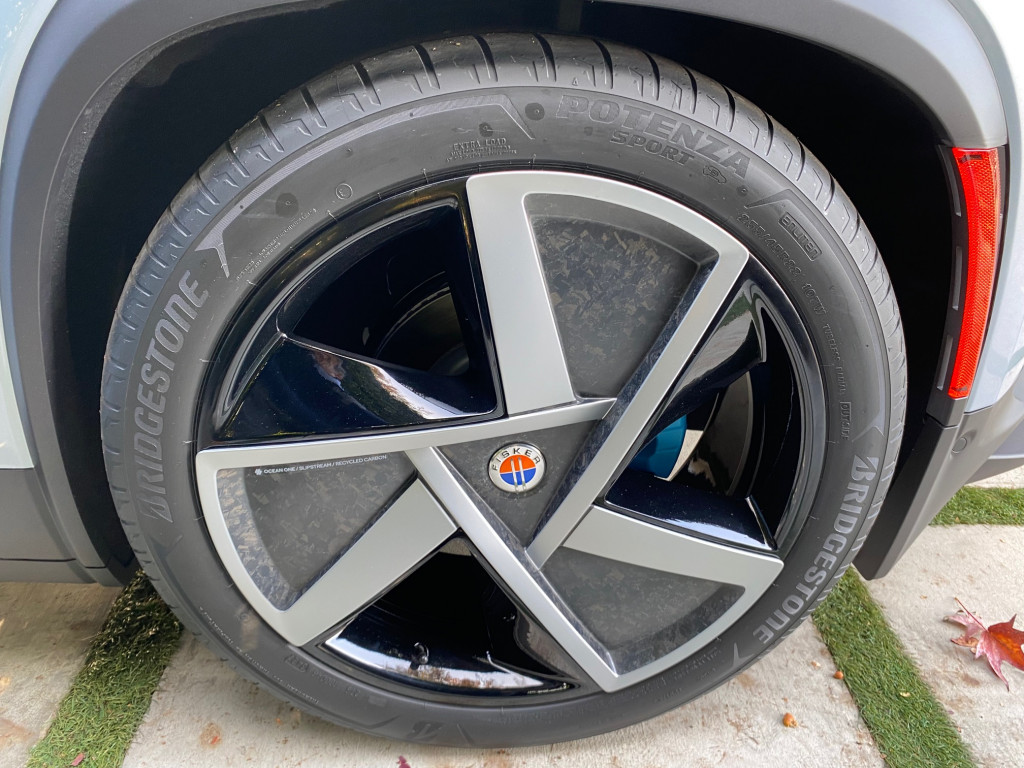
The first 5,000 Ocean models produced will all be a special Ocean One edition, priced at $68,999 and will include 22-inch F3 SlipStream wheels and be offered in an exclusive matte-metallic Big Sur Blue exterior hue. Top $68,999 Extreme and One versions of the Ocean will include a SolarSky roof that the company says could add up to 2,000 miles of range per year—or up to 1,500 "under typical sunny skies" in California.
Fisker is expecting a 250-mile EPA range for the base Sport, with a 275-hp output and 6.9-second 0-60 mph time. The $49,999 Ultra model gets dual-motor all-wheel drive and a range of up to 340 miles, a 540-hp output, and a 3.9-second 0-60 mph time. The top Ultra version gets 350 miles of range, a 550-hp output, a 0-60 mph time of 3.6 seconds.
2023 Fisker Ocean prototype - November 2021
The Ultra, Extreme, and One models also include a "California Mode" that drops the front and rear windows as well as the far-back Doggie Power Windows and rear liftgate window while opening up the roof. Fisker says that the Ocean was designed to be a true SUV over all-out aerodynamics, although CEO Henrik Fisker said that he expected the model's coefficient of drag to be quite good.
All versions of the Ocean will include the capability for vehicle-to-vehicle charging and vehicle-to-home capability, which it terms PowerHouse. Base Sport versions include 20-inch alloy wheels, specially developed Bridgestone tires to maximize range, an app-as-key system, a power liftgate, and an exterior power outlet. A 17.1-inch central touchscreen and a panoramic fixed-glass roof are also included on the base Sport.
Fisker's Intelligent Pilot active safety suite is included in all models, using radar, camera, and ultrasonic sensors and including automatic emergency braking, driver attention monitoring, and much more.
2023 Fisker Ocean prototype - November 2021
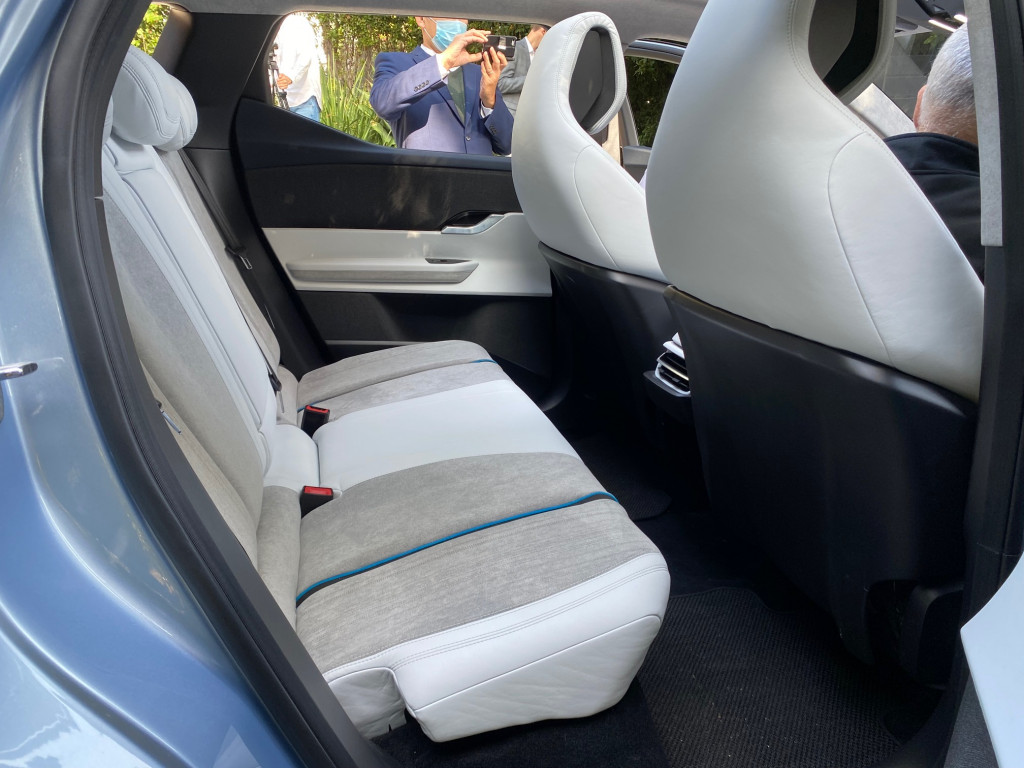
While the small gauge cluster just ahead of the steering wheel will display the basics, in most models the 17.1-inch infotainment screen at the middle of the dash—supplied by Foxconn-owned Sharp and offering class-leading resolution, Fisker says—can be flipped 90 degrees with a button press, when the vehicle isn't moving. That allows navigation and driver prompts to be served in vertical orientation, while viewing and entertainment functions can best be enjoyed in landscape (Hollywood) mode. There's also a Limo Mode that allows second-row passengers to control cabin temperature and audio.
There are a few surprises in equipment and layout. One is that the single motor version of the Ocean is front-wheel drive. Another one is that—in the interest of keeping costs under control—the Ocean has no frunk.
2023 Fisker Ocean prototype - November 2021
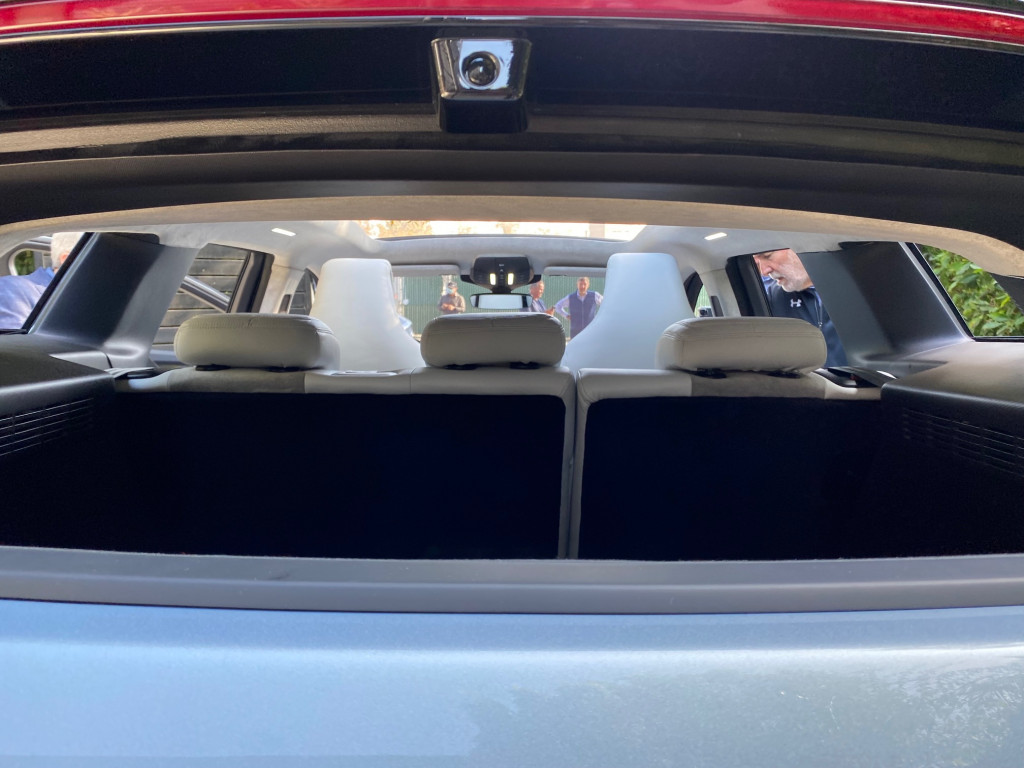
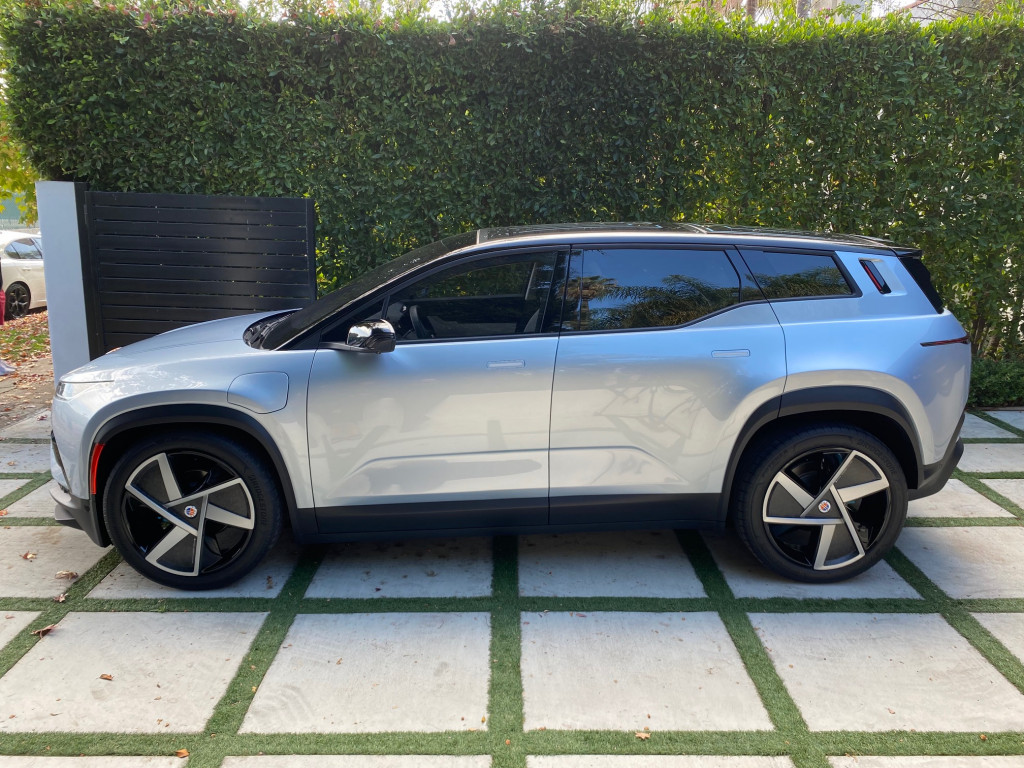
It will offer a lot of space, though—something close to what's considered a mid-size SUV in the U.S. The Ocean's dimensions have changed a bit since its concept debut at CES in January 2020. Length has expanded out to 188.0 inches, while width is 78.5 inches and overall height is 64.1 inches. It rides on a long wheelbase of 115.0 inches, which helps assure a roomy interior. Fisker hasn't yet revealed passenger capacity, but it points to 41.1 and 40.4 inches of front and rear leg room, respectively.
The Ocean will be rated to tow 2,040 pounds in base Sport trim, or 4,000 pounds in One, Extreme, or Ultra guise.
The company plans to establish service centers near major cities in its first two markets, the U.S. and Europe, but it will generally skip the stores and galleries that some other EV startups have focused on. FIsker is asking for a $250 deposit for reservations, but it also promises a Flexible Lease program for $379 a month plus a $2,999 initiation and activation fee—allowing 30,000 miles a year plus the ability to walk away at any time without a penalty.
Home hardware to take advantage of the Ocean's car-to-car, car-to-grid, and car-to-home capabilities is on the way, too—as well as many more details between now and next November.
Green Car Reports Newsletter
Sign up to get the latest green car and environmental news, delivered to your inbox daily!
I agree to receive emails from Green Car Reports. I understand that I can unsubscribe at any time. Privacy Policy.
Norton Motors Ltd (now called Norton Motorcycle Co) was founded in 1898 in Birmingham, UK. Originally a manufacturer of fittings and parts for the two-wheel trade, by 1902 Norton had begun manufacturing their own motorcycles and the rest, you know.
Norton have had a tumultuous journey. Such a rich vein of heritage and racing success, tempered with a chequered, cash-strapped corporate history. Various owners have tried and failed to make a success of the marque. In 2008, Stuart Garner became the new owner and since then, Norton have developed a series of very cool motorcycles. The Dominator and Commando have been in the Norton range for some time and will now be joined by the V4SS/RR, Atlas and Superlight. V4SS and Atlas are supposedly currently in production (although V4SS deliveries are few and far between and I'm not sure if any Atlases have been delivered yet).
The current incarnation of Norton is steeped in controversy and rumours. Suggestions of financial misconduct, customers allegedly queueing up to get their deposits back for motorcycles that they ordered but seemingly will never receive, some resorting to legal action to get their deposits back, suppliers not being paid, CCJ's and so on.
Despite the chaos, some customers have received their motorcycles and one such lucky customer is David who has taken delivery of a Norton V4SS.
David started riding at the tender age of 10, on his mate's brother's FS1E, across the fields of Scotland. As a kid he fondly remembers watching a neighbor wheel his old Norton 850 Commando out of his lock up and try, over and over, to start the thing, until it eventually fired in to life, filling the air with the heavenly sound and evocative smell of an old British four-stroke. That early memory was what got him hooked on Nortons.
When he was old enough to ride on the road, he got himself a Yamaha TY50 and was well and truly hooked. Over the years David has owned a string of bikes, including a CBR600FT, the iconic Triumph 955 Speed Triple, the legendary Ducati Monster 1100 Evo, a Ducati Diavel, a brutal Aprilia Tuono Factory, and BMW RnineT.
In 2016 David put his name on the list for the newly-unveiled Norton V4SS. The V4SS was promised to be a hand built motorcycle from the small UK manufacturer, that was set to rival the best exotica out there. At £42,000 it wasn't going to be cheap, but with numbers limited to just 250, if they ever manage to make that many, it was certainly sure to be rare. Arguably a very sound investment too.
As is typical from Norton, the journey from concept to ownership hasn't been a straightforward one. It took David just over 2 ½ years from placing an order to receiving the bike. There were more than a few occasions when he thought it would never happen, then, in June 2019, when he was at the end of his rope, it did.
And what a bike it is.
The engine is a 1200cc 72° V4 with 82mm bore x 56.8 stroke. It makes a claimed 214 bhp @ 12,500 rpm with 128 NM of torque at 10,000 rpm. Simply outrageous numbers for a road bike. It has all the goodies: titanium inlet valves, slipper clutch, 6 speed cassette gearbox and chain driven cams. The skeptics and rumour-mongers suggest it's actually an Aprilia engine with Norton cases or something like that, as used in their TT race bike, but Norton are adamant it's their own in-house developed engine.
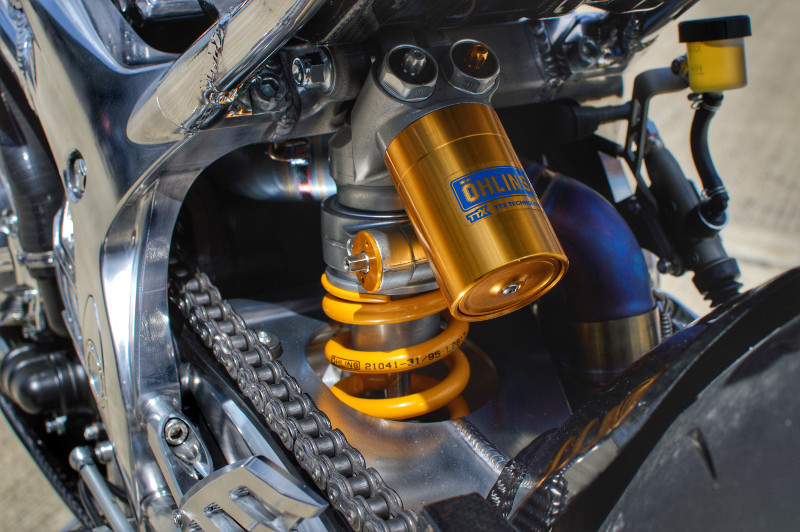
Suspension is by Ohlins with fully adjustable NIX30 system front forks up front and TTXGP fully adjustable rear shock. David says the suspension is superb. He's a fit guy and doesn't carry any extra weight, but he felt he needed to soften it up a fair bit for the road. It's firm but has excellent rebound and compression control. The suspension works best at speed, like the rest of the bike. It's very focused and has quite a stiff chassis, not really designed for popping to the shops on.
Norton publish a wet weight of just 190kg (179kg dry), so as you can imagine, with 214bhp, the V4SS is breathtakingly fast. It produces 40bhp more than the sportbike benchmark BMW S1000RR at 8k rpm. It's absolutely brutal.
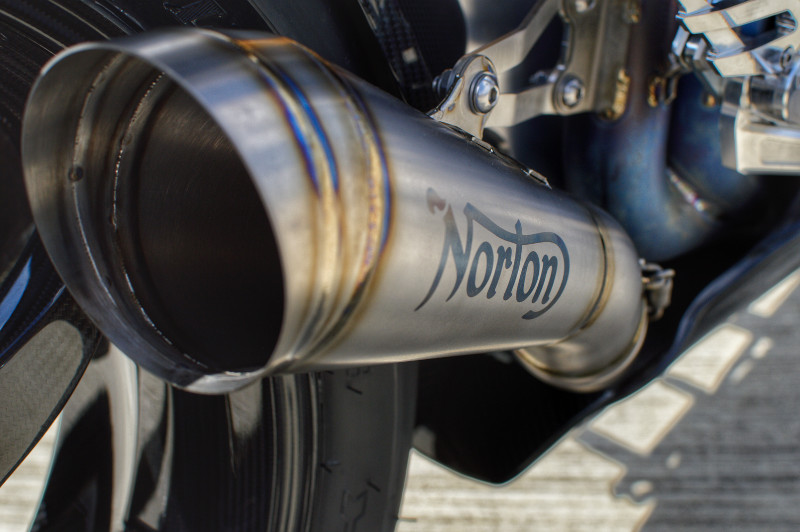
David runs the full race exhaust system that comes with the bike. It's titanium and is a thing of beauty. The engine is mapped accordingly and he says the power is surprisingly linear from 8k rpm on. It sounds like a full fat MotoGP bike too. Beaming like a demented mental patient, he says:
"It's the most visceral biking experience I've ever had. So light to ride, corners like it's on rails, goes like a scalded cat and sounds the nuts too."
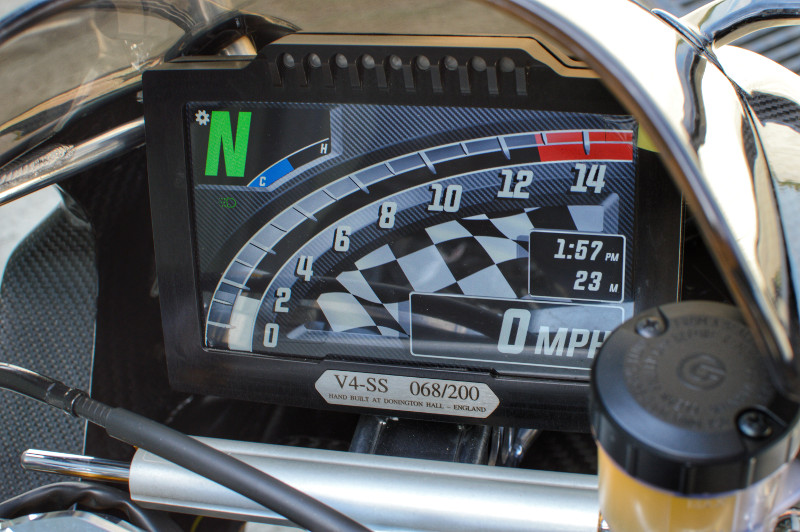
The dash is ultra cool with a full-colour 7-inch display with multiple functions. There are four rider modes: Road, Sport, Wet, Race. There's a full colour rear view camera too, very sci-fi.
Norton have installed a full suite of electronics: Multi-setting traction-control, wheelie control using six-axis Inertial Measurement Unit (IMU), launch control and even cruise control. Amazing for such a low volume manufacturer. There's also a quickshift system and auto down blipper. In operation the electronics aren't as polished as say Ducati or Aprilia but still, very impressive. Currently the race mode doesn't work. Norton says it's still being developed and will be updated at a later date…but we won't hold our breath.
Full data logging is built in to the electronics on the V4SS: including: lap times, max lean angle, max speed, max throttle, and max braking force. Clearly a track focused bike from initial design to execution.
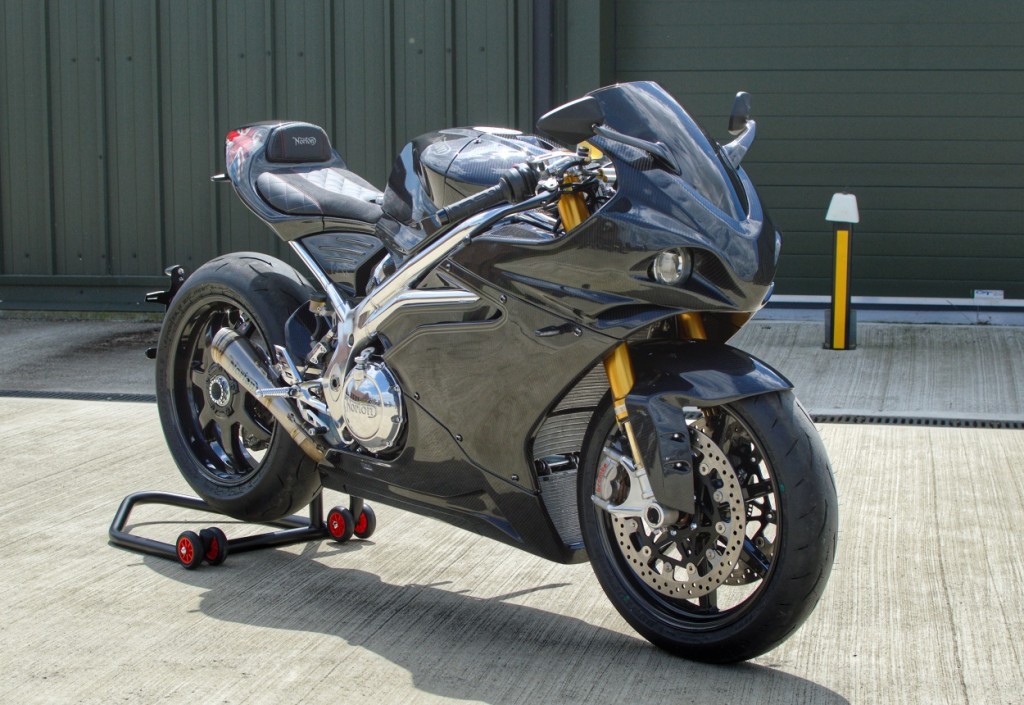
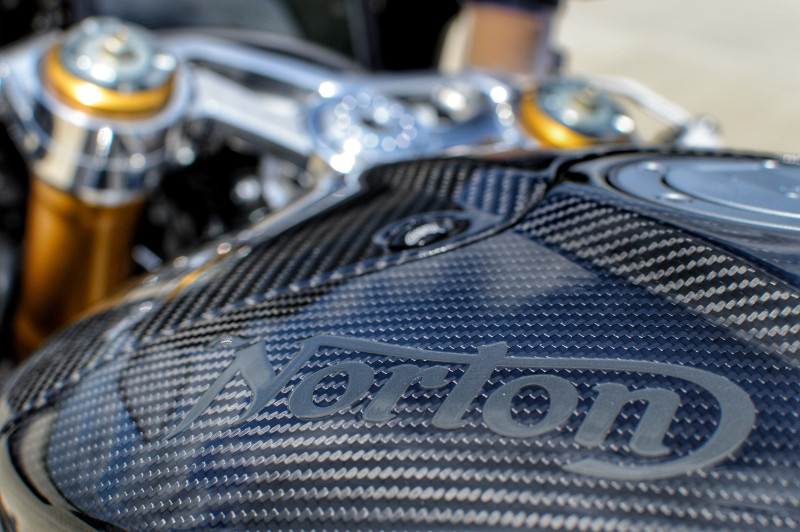
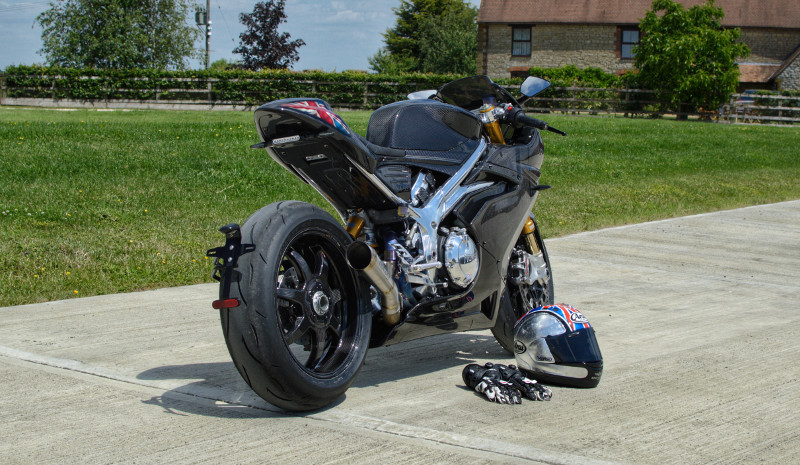
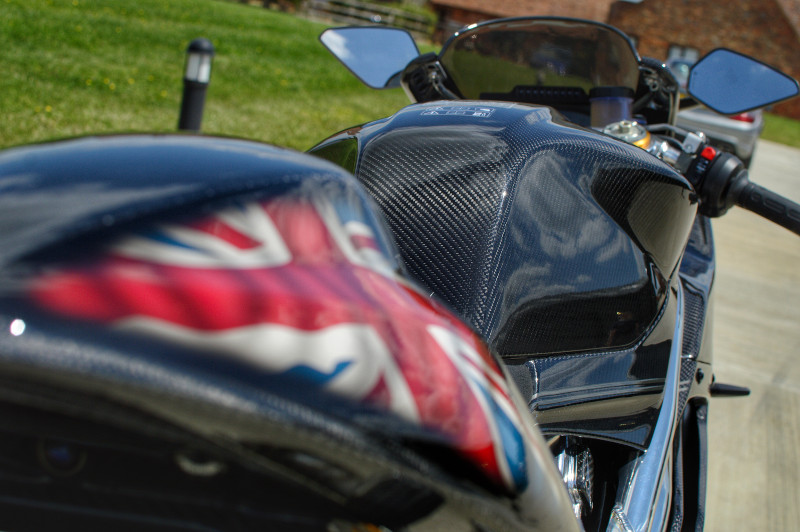
There's no question that the finished article is a wild child. It's utterly gorgeous, with carbon BST wheels, full carbon bodywork, a beautiful aluminium alloy frame and a host of stunning, hand-fabricated components such as fairing brackets, sidestand and so much more.
Who knows what the future holds for Norton, but one thing is for sure, the V4SS will become like a unicorn. A legendary, mythical creature that few have actually seen. I'm very lucky to have been able to see, hear, and photograph it– it's just a shame I'll never be able to afford one.
Rev Off: Ducati Scrambler 1100 vs BMW R nineT vs Norton V4SS
Best remote control cars 2021: RC cars for kids and adults
Included in this guide:
(Image credit: Traxxas)
Start your engines as it's time to race the best remote control cars that you can buy right now. But which is the mini racer to suit you? Yup, it's not just about price, there is a lot to think about when picking the best RC car.
Do you want the best drift car, for example? Or are you looking for straight line speed from the best RC drag car? And had you even considered monster trucks or stunt cars? Yup, there's a good amount of choice out there. Whichever one you fancy, it's important to think about a few parts before you splash out.
Power is a big factor. While most cars are now battery powered there can be different types from NiMH to Lithium and more. It's worth noting that some cars need you to buy the battery separately, or offer other options which get you faster speeds.
Control is another big feature since this is how you're going to become one with your new favorite remote control car. There are twist controllers, stick controllers and even app controlled racers.
Whichever takes your fancy, know that if you go for a top brand like Traxxas, ARRMA or Redcat Racing you won't go far wrong. Just be sure to go for a tough option if you plan to drive fast but without much experience, aka, crash a whole bunch.
So, all that in mind, you're in a good position to start thinking about which of the best remote control cars is the perfect pavement pounding pal for you. Alternatively you may want rails making the best electric train sets worth a look. Or if you want to keep those kids indoors then the best typing software for kids could be an option. And if you're reading this while Black Friday is looming, it's worth keeping in mind you could be in for a real deal worth grabbing.
Best remote control cars Black Friday deals 2021
Black Friday is a great time of year to get yourself a remote control car as there are some superb savings to be had. So you may be able to get a faster and more fun RC model than you'd planned, for the same price, during this sale season. Here are some of the best deals out there right now.
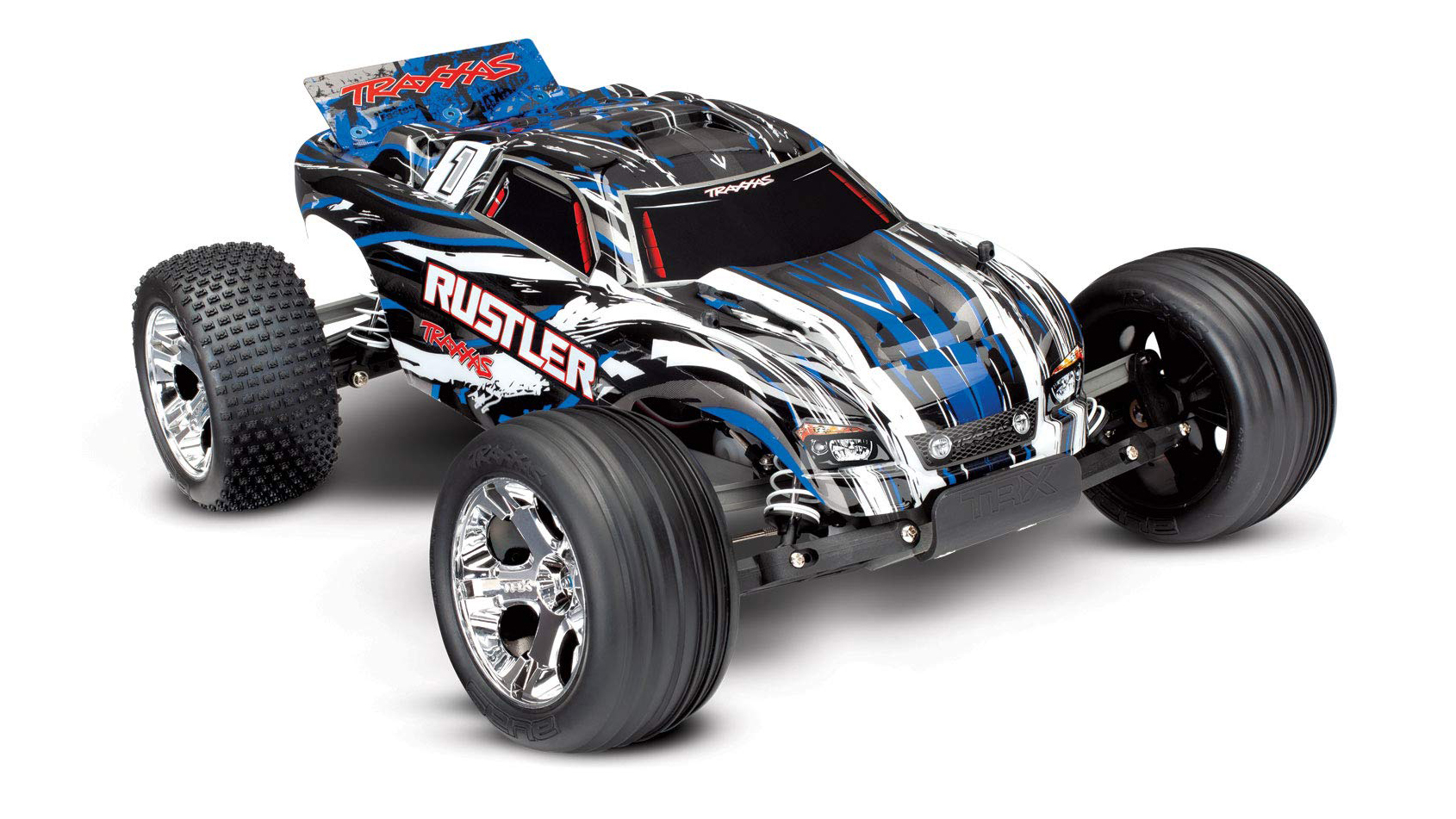
1. Traxxas Rustler XL-5: Best remote control car overall
(Image credit: Traxxas Rustler)
Offering speed and good value, this is the best remote control car for most people
Specifications
Scale: 1/10
Dimensions: 12.2 x 17.5 x 7 inches
Battery: 7-cell NiMH
Warranty: 12 months
Reasons to buy
+Sealed electronics+Easy to control+Can be upgraded
Reasons to avoid
-High price point
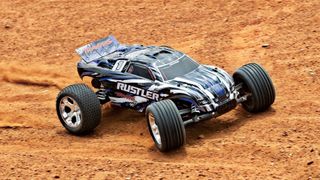
The Traxxas Rustler XL-5 takes the top spot on our list of the best remote control cars because of a near perfect blend of features. These are also topped off with a price tag that seems impossible for a car at this level. As such this is the car that will suit most people.
It's easy to setup and use. The 7-cell NiMH rechargeable battery pushes the Rustler up to 35mph making this lots of fun. That is limited to 15-minutes per charge, though you can upgrade this. There's good ground clearance to avoid knocks and bumps plus sealed electrics so this works in water, snow and mud, making this good even for beginners.
The remote is steering wheel controlled allowing you to drive the two-wheel drive car with precision using that wheel and a trigger. Thanks to the large traction heavy tires this will take on most terrain with ease. The price is relatively low but note that battery and charger are often sold separately.
2. Redcat Racing Lightning EPX Drift: Best remote control car for drifting
(Image credit: Redcat)
The perfect drift car for the price
Specifications
Scale: N/A
Dimensions: 14.2 x 8 x 4.5 inches
Battery: 7.2v 2000mAh
Warranty: 90 days
Reasons to buy
+Easy to drift+Great fun for the price
Reasons to avoid
-Only around 15 minutes battery life-8 AA batteries needed for the radio
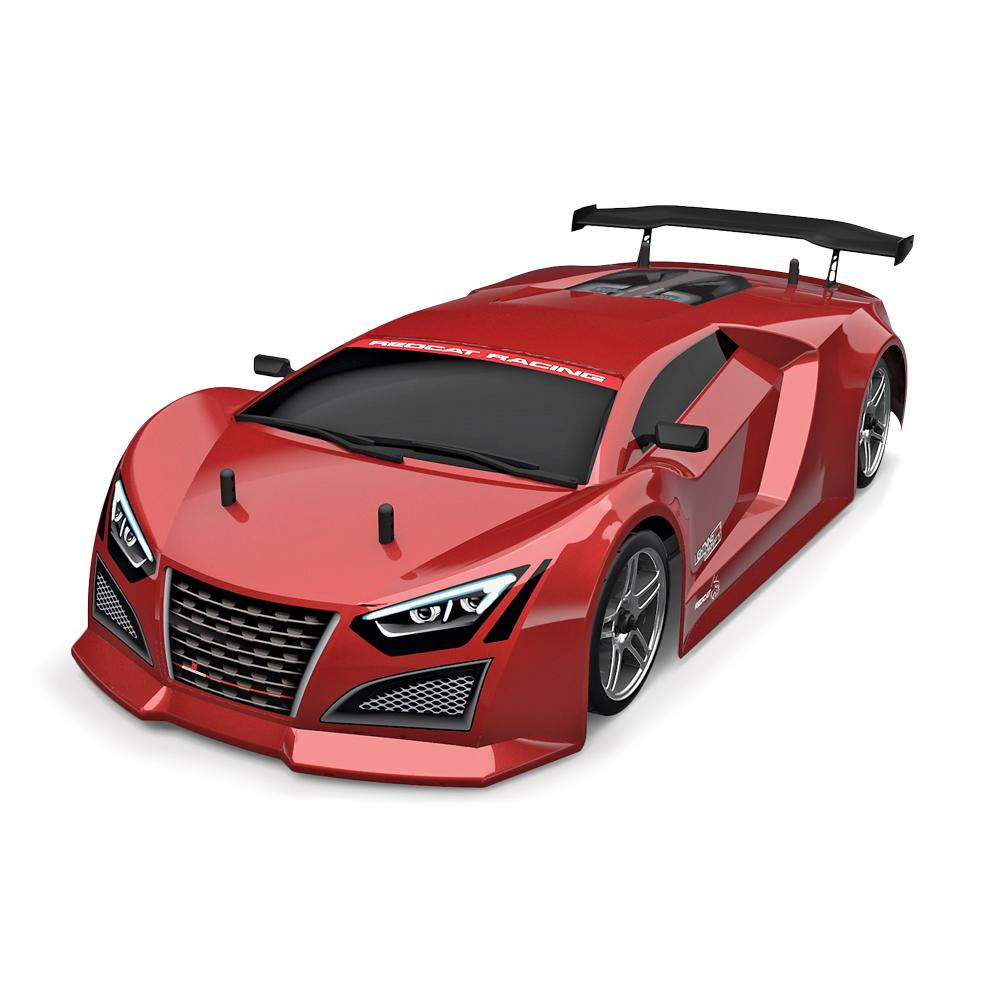
Drift car fans, this is what you've been looking for. The Lightning EPX is lots of fun as it's been designed for sideways racing specifically. This is thanks to a four-wheel drive system which features low-grip rear tyres. So even though this tops out at 15mph it's more about the way you drive this rather than how fast.
You get 15 minutes of sliding fun before the 7.2v 2000mAh battery will start to give in. And that's based on your driving on a smooth surface – which is ideal to get the most drift.
You will need a whopping eight AA batteries for the controller so be sure to buy these - and spares - when you spend on the car itself. It'll be worth it for all the fun this drift car creates.
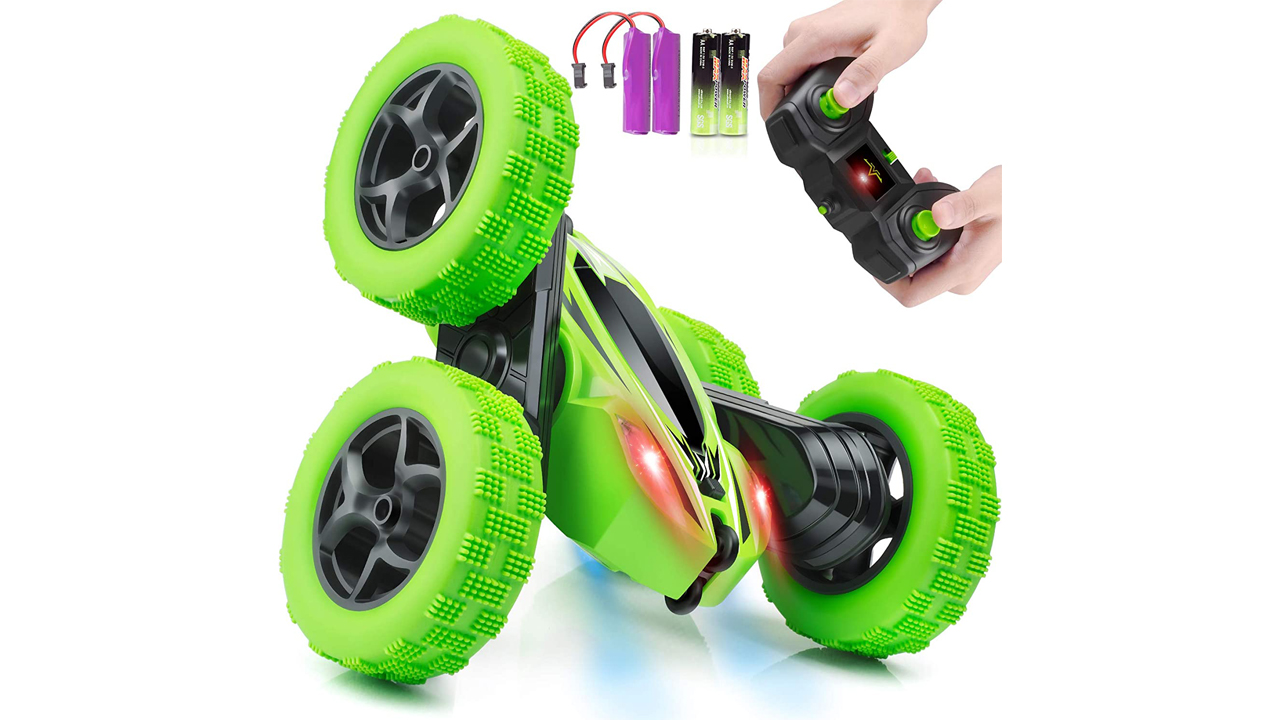
3. ORRENTE Stunt RC Car: Best remote control car for kids
(Image credit: Orrente)
ORRENTE Stunt RC Car
A great budget stunt car, aimed at kids of all ages
Reasons to buy
+Inexpensive+Fun to use, and simple controls+Sturdy enough for outdoor use
Reasons to avoid
-Batteries don't last long
The Orrente Stunt car is a great choice for anyone that loves to do tricks and is especially well suited for kids. It means not only driving a remote control car but one that can flip and contort in ways mom and dad's car could only dream of.
Aimed at ages 6-12, this affordable stunt car is able to drive each side separately. That means the controller uses two sticks which can be mastered for all kinds of fun tricks. This is easy to use but takes some time to master.
This multi-terrain RC car will do flips, it'll rotate and drive in tight circles using that two-stick 2.4Ghz controller – meaning multiple can be raced without worry of interference. Just expect batteries to get used up fast – thankfully it works with rechargeable ones so boosting back to full doesn't have to be expensive.
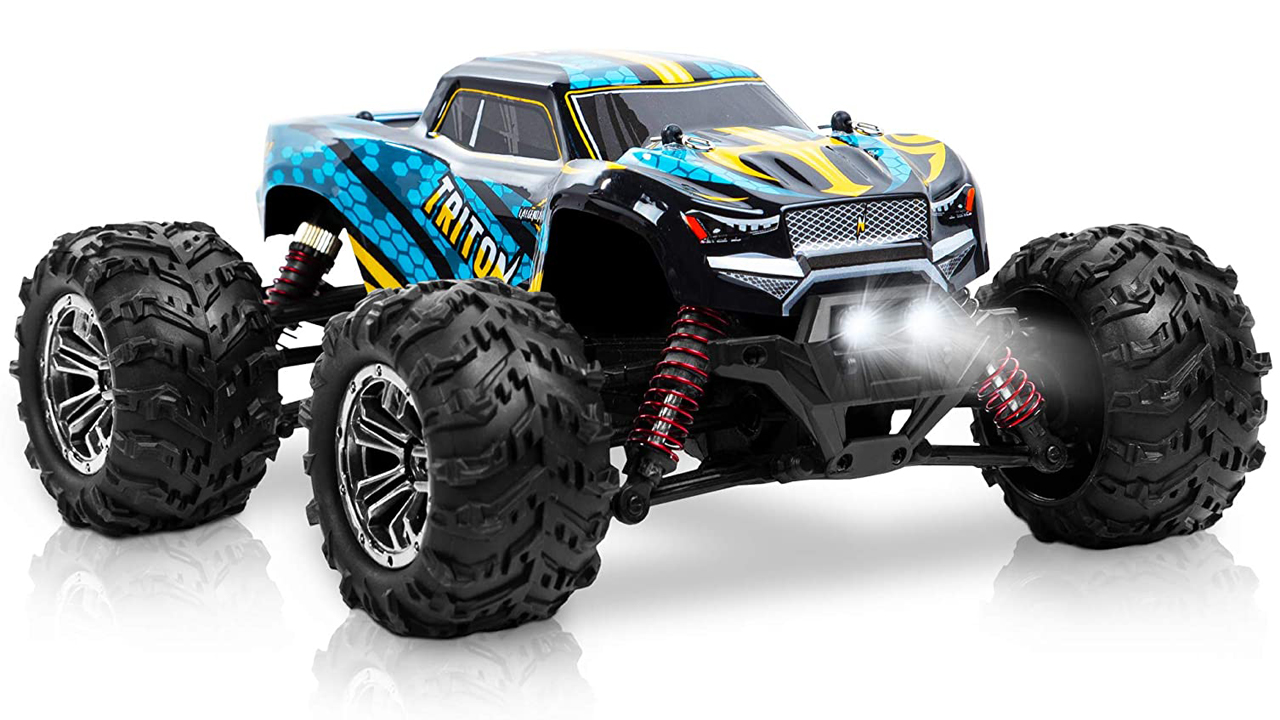
4. Laegendary Off-road Monster Truck: Best remote control car for bigger kids
(Image credit: Laegendary)
Laegendary Off-Road RC truck
A perfect RC truck for older kids
Reasons to buy
+Good value+Very sturdy+Can get good speeds
Reasons to avoid
-A little complex for younger kids
No that's not a typo, Laegendary is the brand and monster trucks is what it's good at making. As such this off-road truck is every bit as all-terrain as it looks with those chunky tires and that high suspension setup.
This is built rugged so it can take a knock or three, even when tearing about at that 20mph top speed. With a 40-minute battery life this is ideal for going out in nature without having to worry about plugging in to recharge. Sure they take a while to recharge but since they come built-in they're easy to use and it makes this an affordable all-in-one option.
The shock absorption system is metal and is set up to clear rocks, branches and anything else that offroading might throw at you. This even has headlights so you can keep going in darker times, which looks super cool too. There's little worry about obstacles as the pistol grip remote is super sensitive so you can control the car very accurately. As such it's aimed at older users mostly.
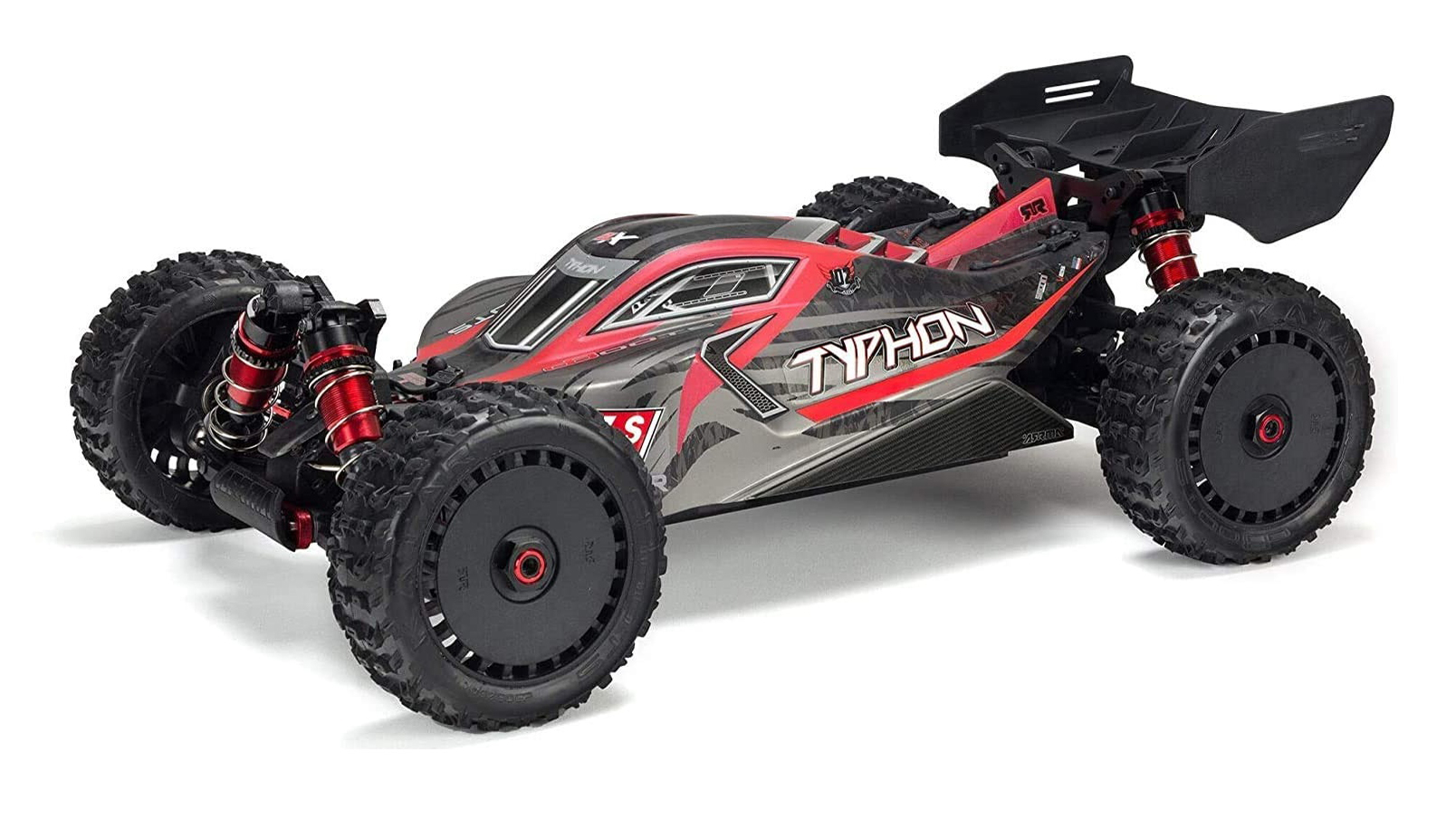
5. Arrma Typhon 6S V4 4WD BLX Buggy: Best remote control car for speed
(Image credit: Arrma)
Arrma Typhon 6S V4 4WD BLX Buggy
A seriously speedy RC car
Specifications
Scale: 1/8
Dimensions: 26 x 14.2 x 10.75 inches
Battery: Varies
Warranty: Two years
Reasons to buy
+ Top speed of 70+mph+ Durable build
Reasons to avoid
-Likely need spare tires
For all out speed this is the car to go for. With the right battery this can hit a mind-bending 70mph. Yup, that does mean this will burn through tires fast but it'll be worth it for the blisteringly fast fun.
If that speed sounds worrying, fret not, the company is all about rugged building. In fact it encourages racers to play with friends at speed and to push the limits, even to the point of risking crashing. The plastic is super flexible and the front basher plate is made to take head-on collisions. The backing of a two-year warranty helps to support this claim of toughness. And frankly, at this price, you'd expect that.
The 2050Kv brushless motor is what gets you all the power from the trigger wheel remote. This Spectrum SLT3 radio is light and comfortable with responsive controls and easily adjustable tracking. Arrma has built a speed demon that's good to race, jump and even get out in the wet and muck. When the tires wear down you can even drift. This does it all very well.
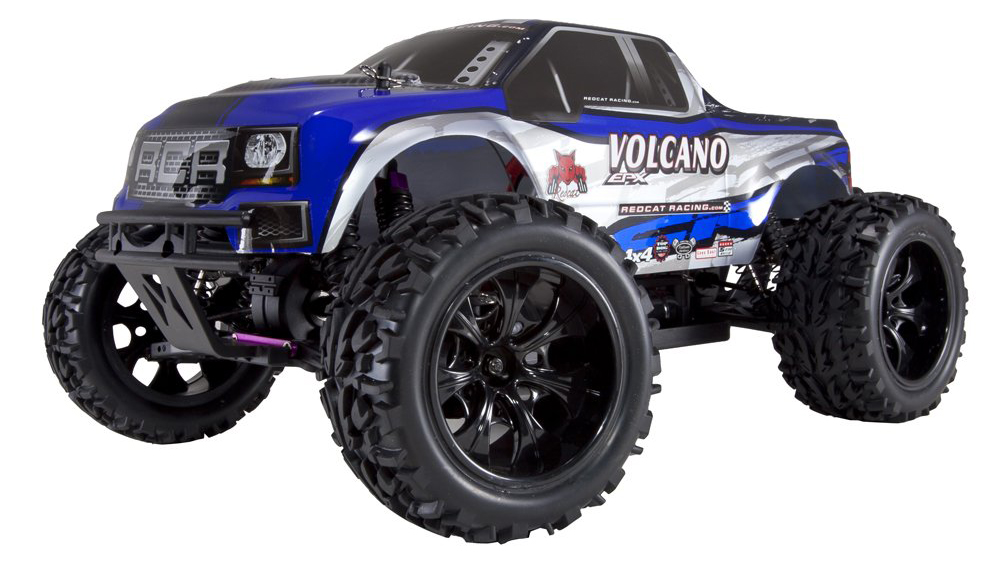
6. Redcat Racing Volcano EPX: Best off-road RC car
(Image credit: Redcat Racing)
Redcat Racing Volcano EPX
4WD monster truck ready for any terrain
Specifications
Scale: N/A
Dimensions: 15.8 x 12.2 x 7.5 inches
Battery: 7.2v 2000mAh
Warranty: 90 days
Reasons to buy
+Stable and fast on uneven terrain+Durable+Waterproof
Reasons to avoid
-Not the fastest RC
Look at that 4WD truck and you'll immediately realize this is built for off-roading. Chunky tires, high suspension, a rugged front basher plate all scream tough. This is made for off-road fun.
The Volcano EPX has such a high ride height it'll take care of rocks, high grass and anything besides. Should it hit a bump that suspension is super tuned to make sure the overall ride remains smooth, even when hitting the 19mph top-end speeds.
The 7.2v 2000mAh NiMH battery powers that four-wheel drive system and is rechargeable for when it's time to boost up. Expect the wheels and suspension to take the brunt of the off-road driving beatings, leaving the car intact and ready to race another day.
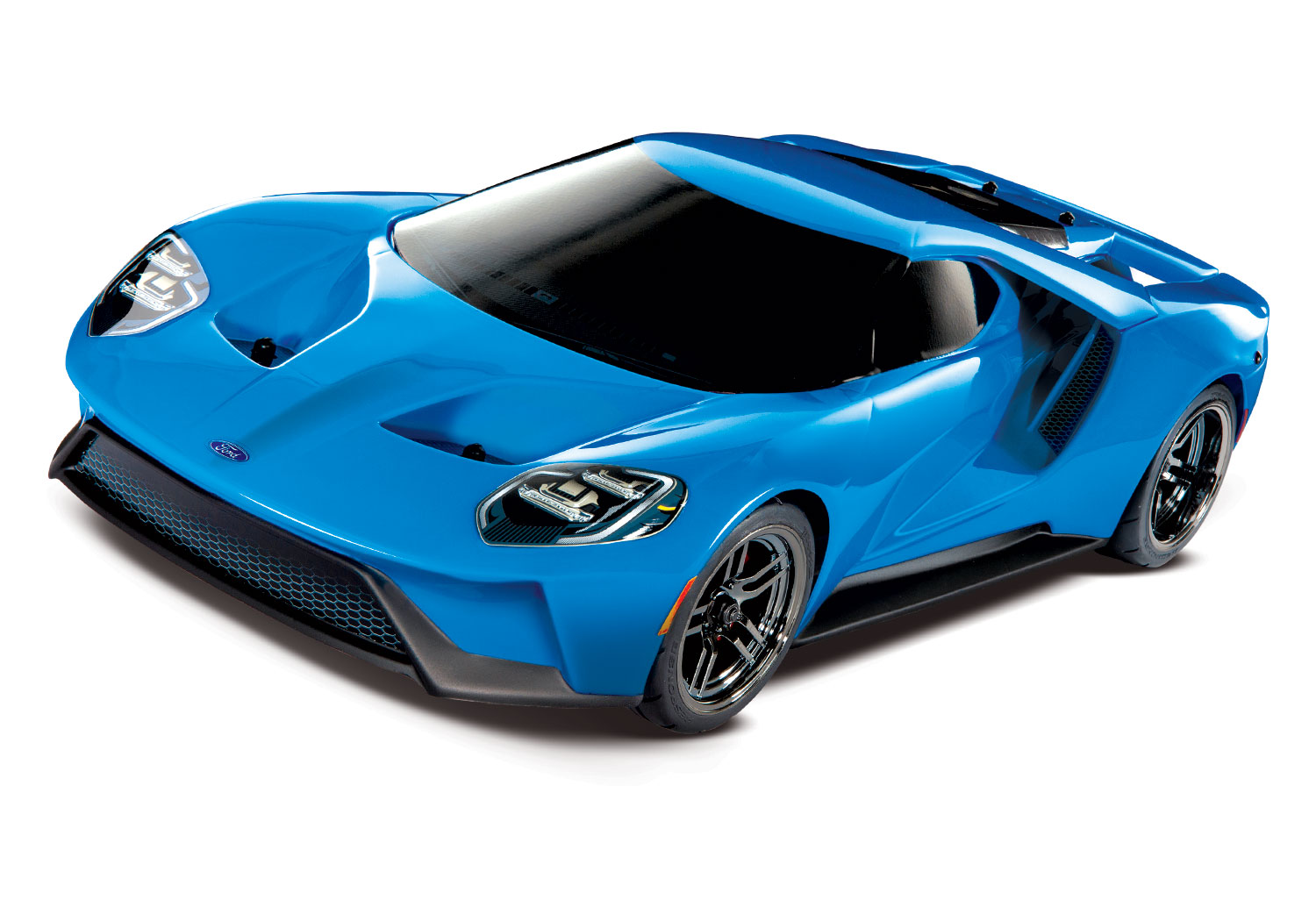
7. Traxxas Ford GT Race Car: Best on road RC car
(Image credit: Traxxas)
Traxxas Ford GT
Ford's GT supercar recreated at 1/10 scale
Specifications
Scale: 1/10
Dimensions: 22.5 x 7.4 x 9.3 inches
Battery: Varies
Warranty: 12 months
Reasons to buy
+Great detail+Brilliant handling+Speeds over 30 mph
Reasons to avoid
-Battery and charger not included
This is a 1/10 scale version of the famous Ford GT, an already low to the ground car. As such this is built to look great, to go fast and to eat up roads. Best kept to smooth surfaces this remote control car can top out at an impressive 30mph. And using the TQiTM 2.4GHz radio system you have instant control precision that's good for racing against other cars.
Even when stood still this is fun with that accurate reproduction of the real car, right down to the injection moulded exhaust tips, replica wheels and aggressive tire tread pattern. You can pick your color with Liquid Blue, Liquid Red and Liquid Grey options – but we all know a real Ford GT is best in blue.
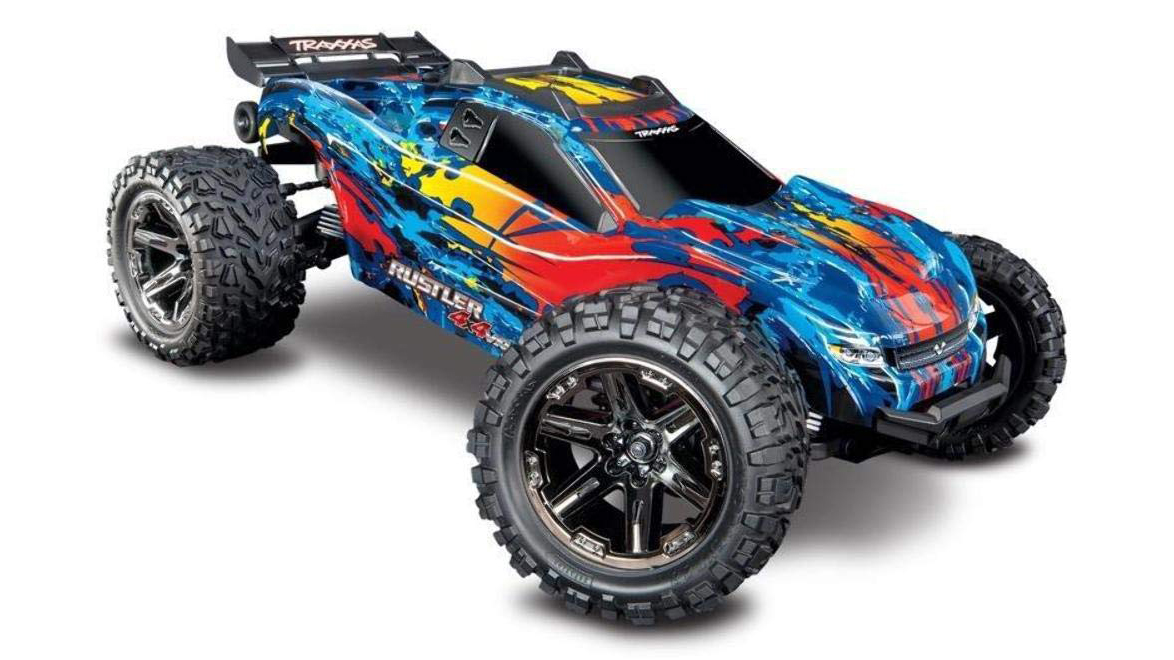
8. Traxxas Rustler 4X4 VXL: Best remote control car for all out performance
(Image credit: Traxxas)
Traxxas Rustler 4X4 VXL
A real beast of a car
Specifications
Scale: 1/10
Dimensions: 13.5 x 22.7 x 7.7 inches
Battery: Varies
Warranty: 12 months
Reasons to buy
+Really fast+Great for wheelies+Self-righting feature
Reasons to avoid
-Battery and charger not included
This four-wheel drive remote control car is a powerful monster. The Rustler comes with huge Talon EXT wheels which offer lots of grip for all terrain types, allowing you to take full advantage of that AWD system.
Go for the 7-cell NiMH battery and you can get 35mph out of this racer. Or for real speed lovers, upgrade that battery to LiPo and this will hit a face-melting 65mph. Either way, should you flip this you won't have to move a finger thanks to a self-righting feature. Press a button on the TQi remote and the Rustler will jump back upright ready for more. So no need to fear when blasting out wheelies using this beast of a car.
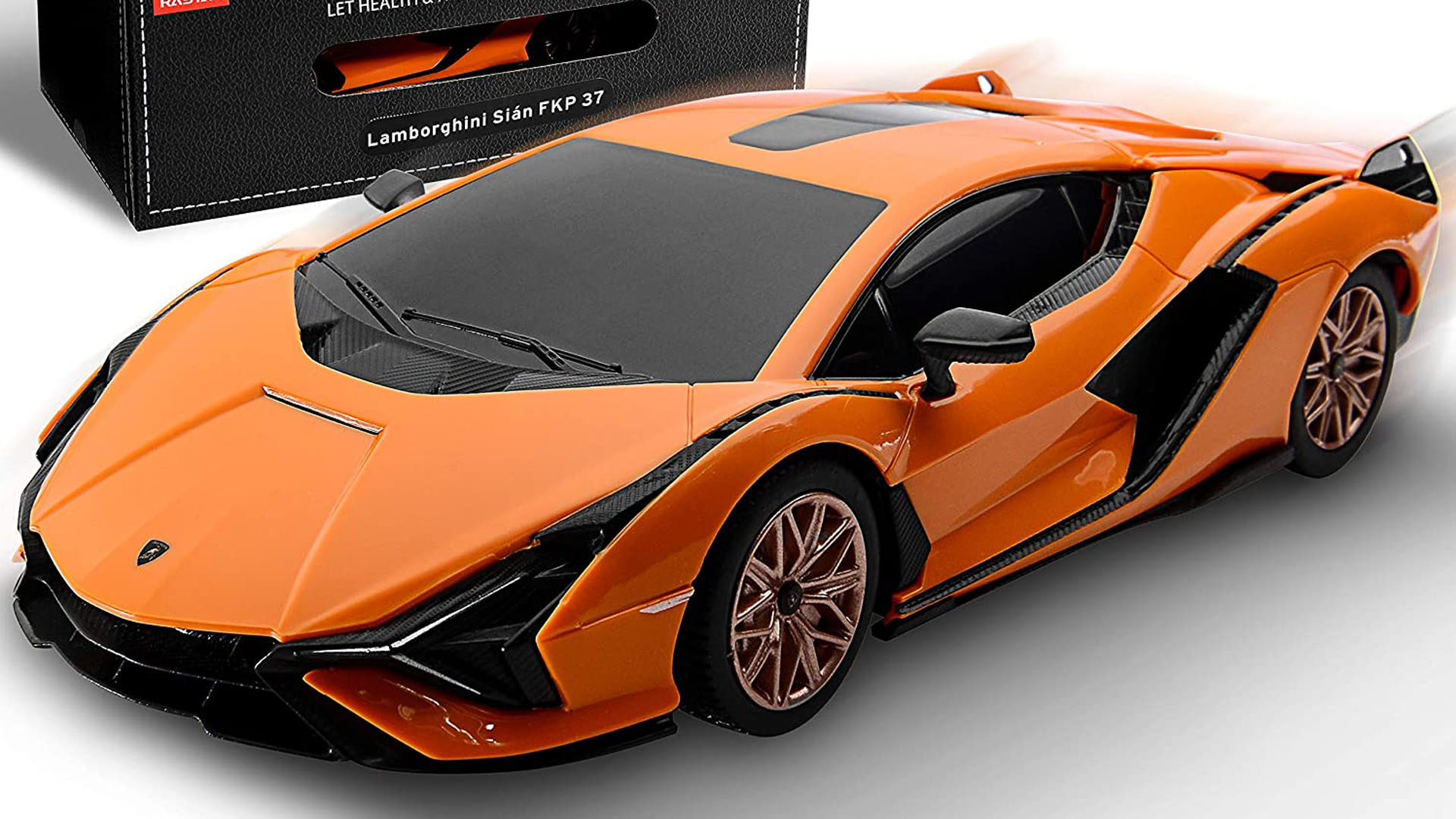
9. BEZGAR X RASTAR Lamborghini Aventador SVJ: Best replica supercar on a budget
(Image credit: Rastar)
BEZGAR X RASTAR Lamborghini Aventador SVJ
A fun replica of Lamborghini's awesome Aventador SVJ supercar makes a great gift
Specifications
Scale: 1/24
Dimensions: 7.3 x 3.6 x 1.9 inches
Battery: 25 x AA Batteries (included)
Warranty: N/A
Reasons to buy
+Less than $40+Choice of color combinations+Easy to use
Reasons to avoid
-Limited battery life-Top speed of 5mph
As replica cars go this is a stunner, looking just like the gorgeous Lamborghini Aventador, only at a 1:24 scale. Despite being modelled on such a premium machine, this is super affordable to buy. The catch? It will require 24 AA batteries, so either have rechargeable ones ready or a whole load of spares.
That said it won't chew through battery fast as this is limited to 4mph. Ideal for younger drivers then. That said it has been known to drift too, so there is still plenty of fun to be had with this car. And with a 2.4GHz controller it can go up to 80 feet away before losing signal.
You even get to pick the Lamborghini color with suitably loud orange and yellow options available.
What are the best remote control car brands?
There are a few well-respected names in the industry. Traxxas, Arrma and Laegendary cars are all well regarded by hobbyists and amateurs alike. These brands build durable, fast, and powerful cars, with models that can handle rough off-road terrain and racing tracks alike. We like Redcat Racing too, as they create super affordable models that look pretty slick. Sure, they might not have the power of one of those Traxxas monster trucks, but when you want something that looks great on your shelves as well as on the racing track, Redcat Racing is an excellent choice.
How much do remote control cars cost?
A good model, capable of handling 30+mph, will usually cost around $300 - $400. These types of models usually come with a year-long warranty, to protect that initial investment. You can buy models that hit about 15mph for a lot less than this if you don't need those top speeds. These tend to cost $100 or less, but watch out for the shorter warranties, which will only last for around 90 days.
How fast are remote control cars?
In general, the top speed you'll be able to achieve with a remote control model will be 70mph. These kinds of speeds are only really attainable if you buy one of the top-tier models that are built for race tracks, though. If you're thinking of buying one of the all-terrain, off-road models, these tend to max out at around 20mph. But their sturdy bodies and sealed electronic systems mean that you can still have plenty of fun. Cheaper models tend to be slower, reaching speeds of around 15mph max.
How do I choose a remote control car?
People choose remote control cars for all sorts of reasons, but the main one is their performance. RC vehicles are built for racing, so you'll want one that's built to go fast over the type of terrain you will be racing over, and which won't run out of power halfway around. Also look out for the sturdiness of construction, as unexpected pit stops can really ruin those lap times.
Speed Of course you want it to go fast, but make sure it can handle the speed, and remain controllable as the needle rises. Increased speed means trickier cornering, but also more impressive jumps and skids, so generally you're going to want any extra power that's available. Unless, of course, you're buying one for a younger child, when something that crosses the carpet at a more sedate pace might be required.
Handling Check out the size of the wheels and the tires on them - you're going to want bigger, wider ones for better grip. This not only helps get the power down without spinning, but means you're less likely to lose the back end as you corner - unless drifting is what you're into, of course. Match the tires to your intended racing surface - slicks or semis for hard, flat tarmac, off-road tires for just about everything else.
Durability Crashes happen, and can be some of the most exciting parts of an RC race. There's nothing more heartbreaking, however, than being left with a pile of broken plastic parts where your prized racing car used to be. A car that you can easily repair, whether by snapping parts back on with your hands or using simple tools, is going to get you back in the race more quickly. Off-road vehicles can take knocks from curbs and walls on their larger tires, but road racing cars may need careful nursing around sharp bends to avoid scratches to headlights and paintwork.
Different types of remote
The remote control is your interface with the RC vehicle. For this reason, it's important to select a vehicle that comes with a remote suited to your skill level. In our review, there are just a few major remote types.
2.4GHz pistol-grip style The most advanced type of remote, these offer proportional control over steering and throttle, as well as increased ranged and customizability. While these features are all appealing to the advanced or adult user, young children will no doubt have a hard time with such sensitive controls.
Bluetooth connection The second type of remote is really not a remote at all. Many vehicles, yet just one in our review, make use of a Bluetooth connection for control. This allows you to use a phone or tablet with your vehicle and opens an entirely new world of possibilities. With this option, you can stream music, operate turn signals and even open the doors of your vehicle. However, you pay for these additional features with a decrease in range and increased difficulty in actual driving.
Two-button controllers The third type of remote is what we call the two-button controllers. Pressing the button on the left causes your vehicle to veer to the right, while pressing the button on the right results in the vehicle turning to the left. When both buttons are pressed simultaneously, the vehicle travels straight ahead. While this doesn't offer much freedom or precise control, it is a great way of simplifying things for kids.
Ruth has worked across both print and online media for five years, contributing to national newspaper titles and popular tech sites. She has held a number of journalist roles alongside more senior editorial positions, and is now the Digital Learning and Hobbies editor at Top Ten Reviews.